The new ultra-modern ZAP-X treatment machine will be installed at Hôpital Lariboisière in April 2025. This advanced intracranial radiosurgery technology, developed through a unique collaboration between APHP and the Hartmann Institute of Radiotherapy, will enable precise treatment of brain lesions without the need for invasive surgery. We invite you to discover this ambitious project in this article!
What is ZAP-X?
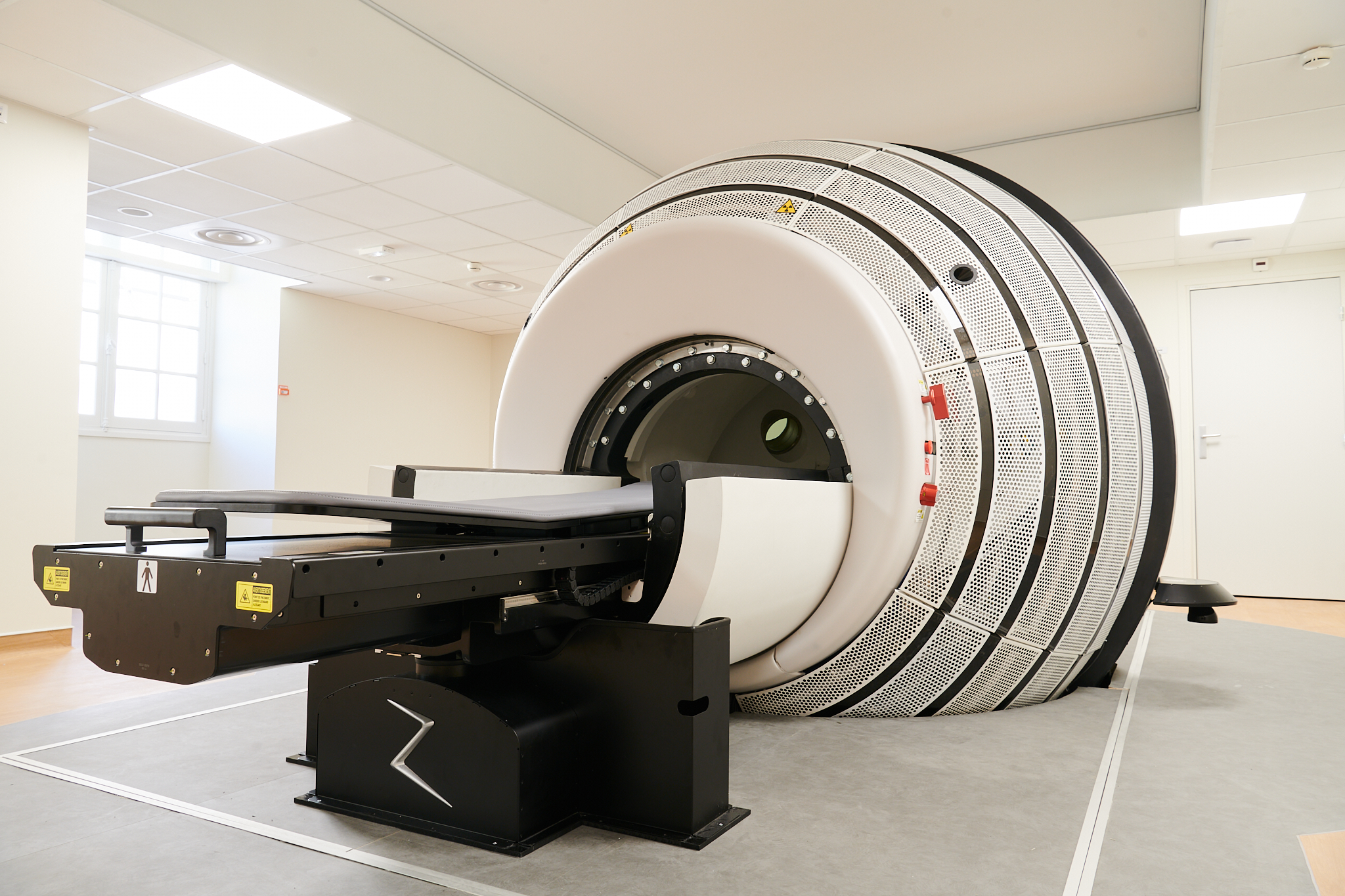
ZAP X is a cutting-edge gyroscopic radiosurgery system that treats brain tumors with extreme precision.
Its operation is based on a miniaturized linear gas pedal designed to generate focused mini-beams of X-rays to treat intracranial lesions. This machine is dedicated to the treatment of lesions located in the head and neck.
Using a self-shielded SRS (Stereotactic Radio Surgery) system, it ensures optimum radiation protection while minimizing exposure of healthy tissue. This makes zap x technology a non-invasive alternative to traditional surgery.
Comment fonctionne le ZAP-X ?
The ZAP-X combines precision and surgical robotics to treat certain intracranial lesions without invasive intervention.
Like a virtual scalpel, it uses mini-beams of X-rays generated by a linear gas pedal. These pass through brain tissue without damaging it, before converging locally on the tumor or abnormality to be treated.
This principle is based on non-coplanar radiation, i.e. beams emitted from multiple angles to deliver the right target dose while minimizing exposure of healthy tissue in the surrounding area.
Its gyroscopic system allows 360° rotation around the patient for optimum coverage.
Quels sont les avantages du ZAP-X ?
ZAP-X enables high-precision intracranial radiosurgery that is both safe and highly effective. Its non-invasive treatment is totally painless, and requires no anesthesia or hospitalization.
Only a thermoformed mask adapted to the patient’s morphology is used to ensure comfort during the procedure.
ZAP-X radiosurgery can be proposed for the treatment of benign and malignant tumors, as well as certain vascular anomalies and neurological disorders located close to sensitive areas (such as the eyes or ears).
This therapeutic solution can be offered as a non-invasive alternative to traditional surgery, or as a complement to partial treatment of a lesion.
It also helps to improve patient care , making it more accessible and efficient, and opens up new perspectives in the treatment of complex intracranial lesions.
A unique collaboration at the service of patients
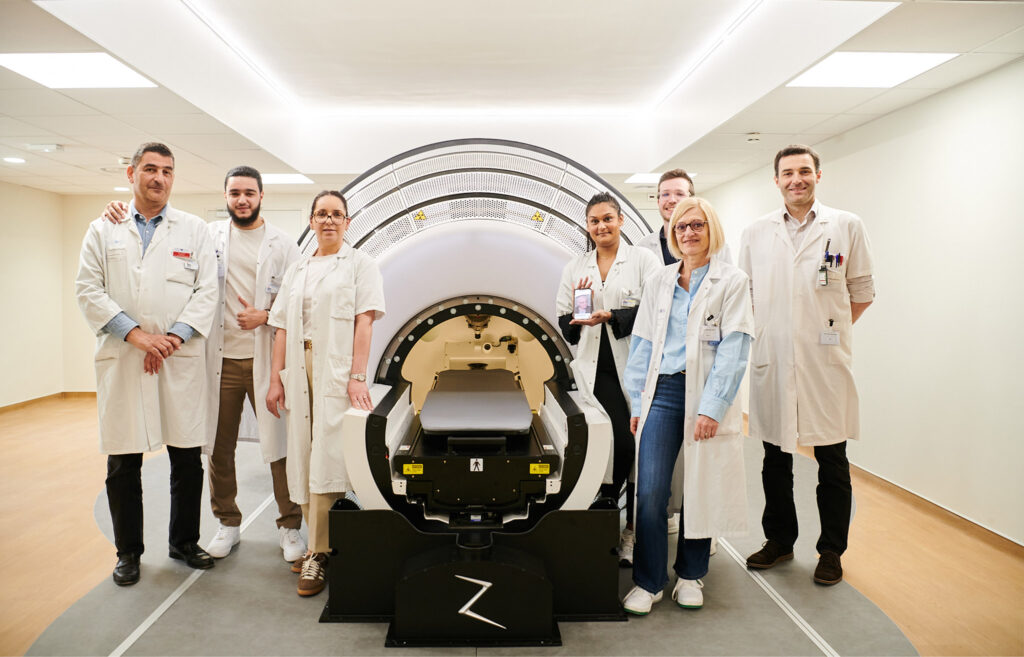
The installation of ZAP-X at the Lariboisière hospital is the result of an unprecedented collaboration between APHP and the ELSAN clinical group via the Hartmann Radiotherapy Institute.
This partnership combines the expertise of seven specialized departments in three APHP hospitals (Lariboisière, Saint-Louis and Beaujon) with that of a private radiotherapy reference center.
This public/private synergy enables us to offer patients optimum care by combining advances in radiosurgery and gas pedal control, with the experience of our medical teams in neurosurgery and oncology.
This project represents the culmination of a shared desire to improveaccess to care, with no extra charges, and to offer in France a global innovation hitherto reserved for a few international centers.
An ambitious project in a historic setting
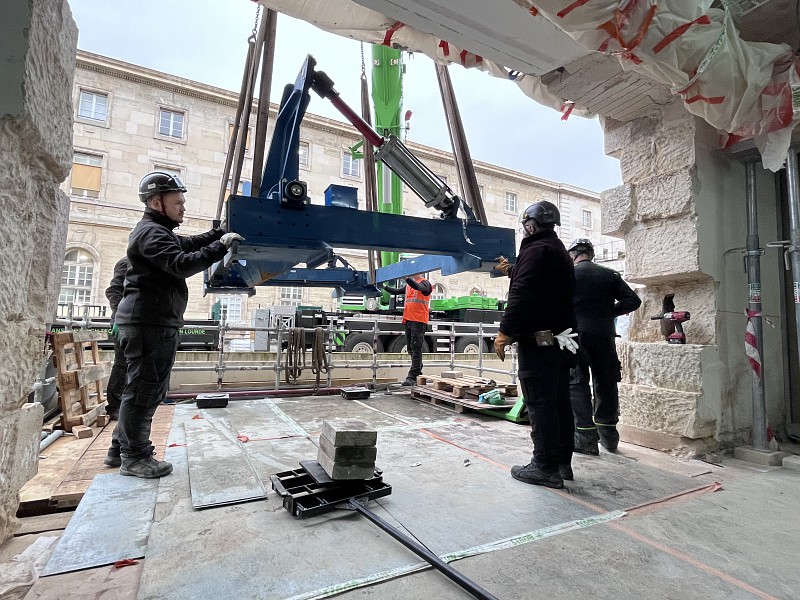
Installing ZAP-X at the Lariboisière hospital represented a real challenge, both technically and architecturally. This listed site required delicate restructuring work to accommodate this latest innovation in radiosurgery, while preserving its historical heritage.
To integrate this equipment designed to treat the brain, head and neck, the structures were transformed: a façade was partially opened and rebuilt stone by stone, reinforced foundations were created and installed, and a reinforced concrete pit was built to support the weight of the machine (which weighs 27 tonnes!).
Thanks to its integrated shielding, the ZAP-X’s design enables maximum safety and use in hospital environments without the need for a specialized bunker.
Its application in intracranial radiosurgery aims to offer a non-invasive, ultra-targeted treatment that reduces side effects and eliminates the risks associated with conventional surgery.
The arrival of this technology represents a decisive step forward for the future of neuroscience in France. The platform is scheduled to open in the first half of April 2025.
Discover the APHP – ELSAN interdisciplinary collaboration