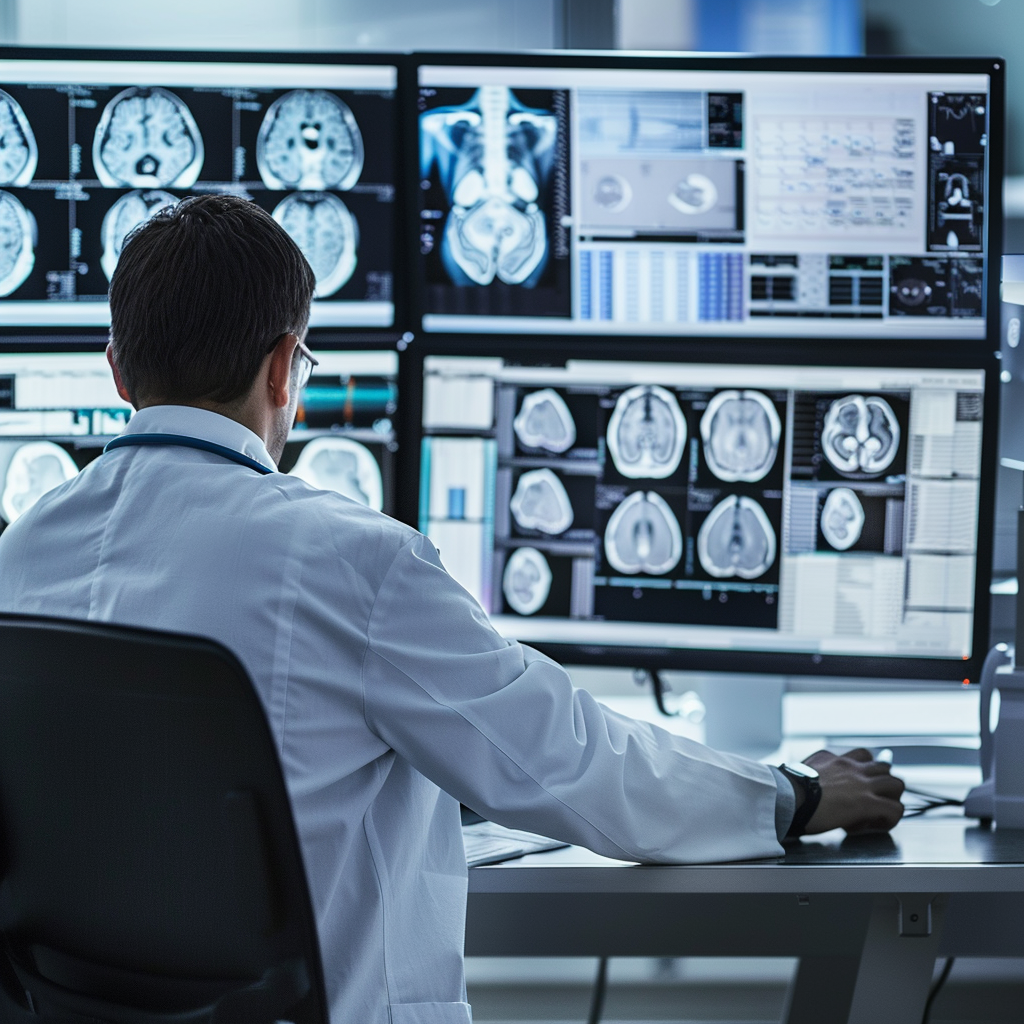

The radiotherapist is a doctor specializing in radiation treatment (ionizing radiation).
A radiotherapist is a doctor specializing in the treatment of cancers and certain brain diseases using radiation. Their role is to design and supervise treatments called radiotherapy, which use high-energy rays to destroy tumor cells while preserving healthy tissue as much as possible.
On a daily basis, he works in close collaboration with neurosurgeons, oncologists, radiologists, medical physicists and radio manipulators. Together, they design a personalized treatment for each patient, taking into account the location of the lesion, its type and the patient’s general condition.
Radiotherapy: treatment without surgery
Radiotherapy is based on a simple principle: to concentrate rays very precisely on a diseased area in order to stop the growth of tumour cells.
- It is used to treat certain benign or malignant brain tumors, metastases or vascular malformations.
- Unlike surgery, there is no opening of the skull: the treatment is non-invasive and generally performed on an outpatient basis.
- Sessions are painless, and patients can go home the same day.
Zap-X: innovative brain technology
The Zap-X machine from Lariboisière is now one of the radiotherapist’s tools.
The Zap-X is distinguished by several features:
- It is specially designed for treatment of the brain and head.
- It delivers radiation down to the millimeter, thanks to a robotized guidance system and on-board imaging.
- Treatment is carried out without anaesthesia or surgery, and often in a single session (known as radiosurgery, the effects of which are different from those of multiple-session radiotherapy).
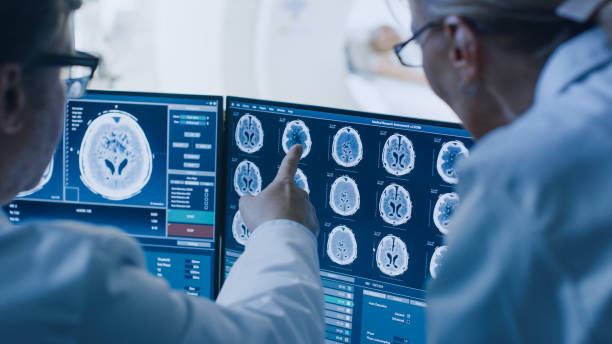
This approach offers an effective alternative to conventional surgery for certain patients, reducing risks and improving comfort.
Radiotherapists and Zap-X: a team effort
During treatment with Zap-X, the radiotherapist does not act alone. The course of treatment is the fruit of multidisciplinary collaboration:
- The radiotherapist defines the strategy and radiation dose in collaboration with the neurosurgeon to define the target to be treated.
- The medical physicist checks the calculations and technical parameters.
- The radio manipulator accompanies the patient during the session.
- The neurosurgeon may be involved in the therapeutic decision, depending on the type of pathology.
This organization guarantees safe, precise and appropriate treatment.
The Zap-X patient pathway
The standard path includes :
- a medical consultation to explain the treatment,
- a locating CT or MRI scan,
- drawing up a personalized treatment plan,
- the Zap-X session, often a one-off,
- clinical and radiological follow-up in the following weeks and months.
The expertise of Lariboisière Hospital
Hôpital Lariboisière (AP-HP, Université Paris-Cité) is one of the first centers in France to have integrated Zap-X technology. Under the coordination of Pr Froelich, Pr Hennequin, Pr Nataf (APHP) and the ELSAN teams, radiotherapists and medical physicists work hand in hand to offer patients the most advanced techniques in cerebral radiotherapy.
This expertise enables us to offer patients innovative, precise and safe treatment at the heart of a leading university hospital.