Radiosurgery is an exceptional avant-garde technology. It offers the possibility of treating certain brain disorders without the need for invasive surgery. It uses high-precision mini-beams of X-rays to precisely target tumors, vascular malformations and neurological disorders.
What is radiosurgery?
Radiosurgery is a sophisticated stereotactic radiotherapy technique that uses precisely directed beams of radiation to eliminate a specific tumor, vascular malformation or treat certain neurological disorders, while preserving surrounding healthy tissue.
In practice, radiosurgery works on the principle of a magnifying glass that focuses sunlight.
Taken individually, each beam is of low intensity and harmless to the tissue it passes through. But when they meet exactly on the target area, their combined force is powerful enough to eliminate abnormal cells.
This technique is based on the use of a highly precise three-dimensional tracking system (called stereotaxis), to map the area to be treated and guide the rays with surgical precision.
In this setting, sessions are quick, painless and require neither incision nor hospitalization.
Where does radiosurgery come from?
Radiosurgery was invented in 1951 by Swedish neurosurgeon Karl Leksell.
After several trials with proton beams, he developed the Gamma Knife, a device that uses cobalt-60 sources to treat brain lesions with millimetric precision.
In the 1980s, conventional linear gas pedals for radiotherapy were adapted to use this technique with X-ray beams.
In the 1990s, the arrival of dedicated linear gas pedals , i.e. those designed exclusively for this activity, further expanded treatment possibilities:
- The CyberKnife, based on a robotic arm, treats tumors that are mobile or located outside the brain.
- At the same time, the Novalis system – which combines a linear gas pedal with an advanced imaging system – further optimizes targeting and treatment precision.
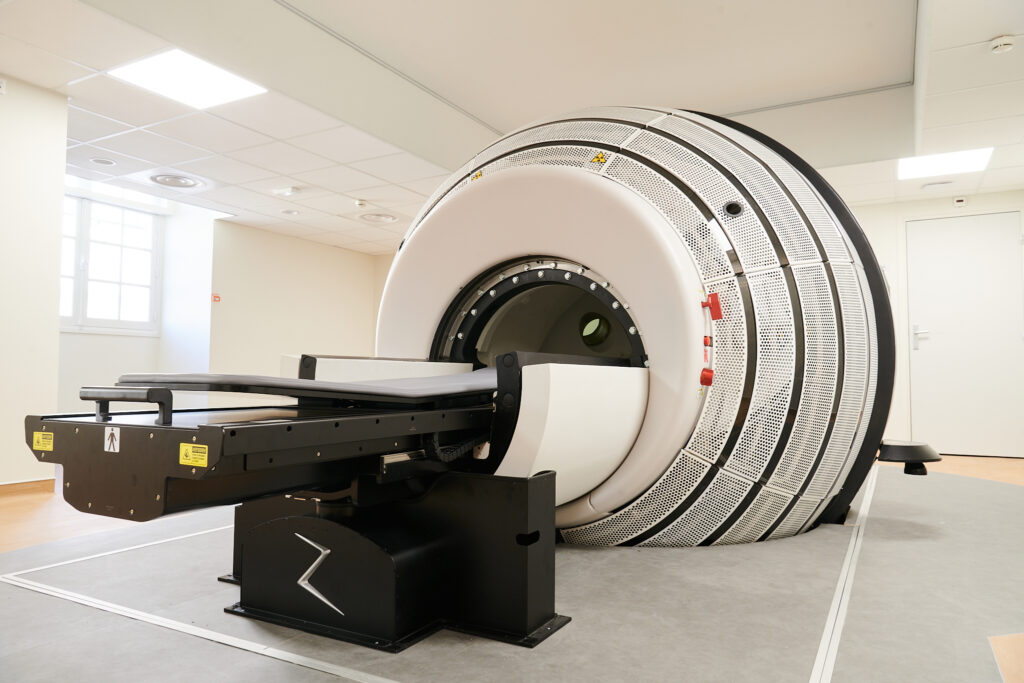
More recently, the ZAP-X, designed by Dr John Adler (also creator of the CyberKnife), represents a further step forward.
This equipment incorporates a miniaturized linear gas pedal mounted on a gyroscopic structure for even more precise treatment. Its self-shielding also eliminates the need for a bunker, which has contributed since its creation to making radiosurgery more accessible!
In France, radiosurgery was introduced in 1984 at the Hôpital Sainte-Anne. Since 1986, collaboration with the APHP (Tenon hospital for radiotherapy and Lariboisière hospital for neurosurgery and neuroradiology) has contributed to its development.
What types of tumors are treated?

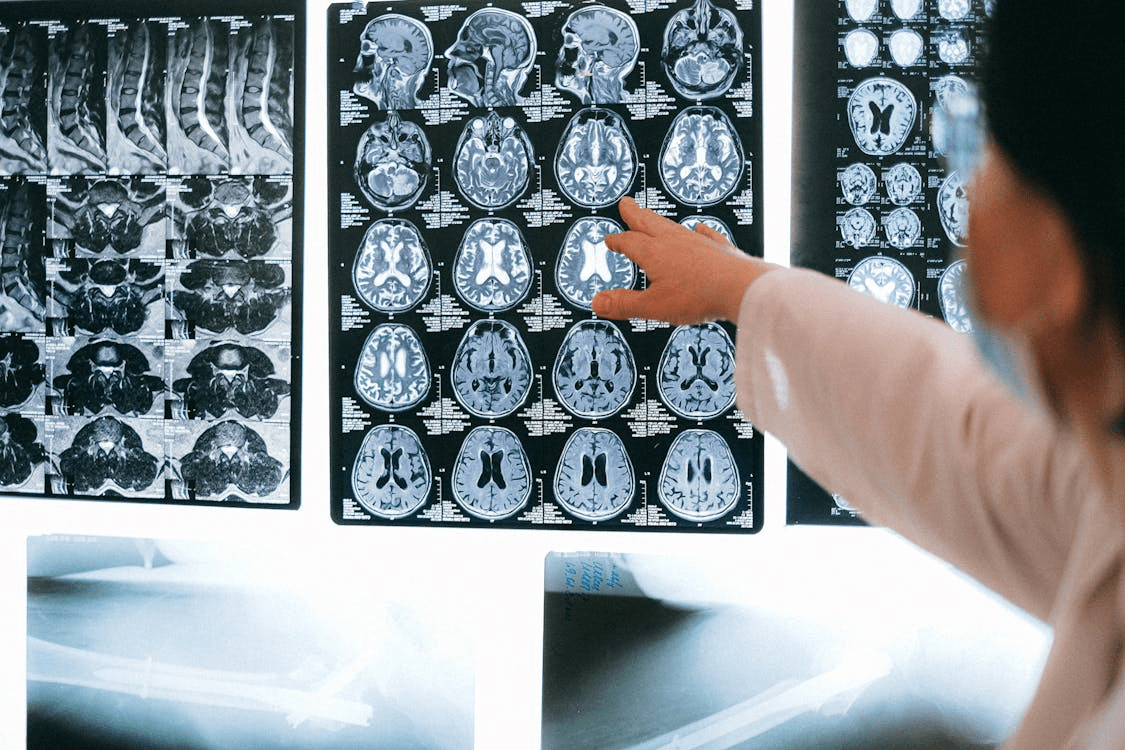
Radiosurgery can be used to treat benign or malignant brain tumors, as well as certain vascular malformations and neurological disorders.
It is particularly effective against meningiomas and vestibular schwannomas (acoustic neuromas), which are generally treated in a single session, as well as against brain metastases, even multiple or radio-resistant ones. This technique is ideal when the volumes to be treated are not too large (a few centimetres).
It can also be used for certain trigeminal neuralgias, essential tremors or cerebrovascular malformations such as arteriovenous malformations and cavernomas, when surgery is too risky.
How does radiosurgery work?
A radiosurgery treatment consists of several stages:
After a consultation with the medical team, an imaging survey (MRI and CT scan) is carried out to locate the lesion and plan the irradiation (outlining the lesions to be treated and the brain structures to be protected).
On the day of the session, the patient is fitted with a fixation system:
- With a stereotactic frame, fixed under local anaesthetic (for Gamma Knife).
- With a thermoformed mask (for CyberKnife and ZAP-X).
The radiosurgery machine then delivers targeted beams of radiation, destroying the lesion without affecting healthy tissue. The session lasts around 30 minutes, but can take up to 2 hours, depending on the equipment and the pathology to be treated.
The treatment is painless and requires no incision. After a few minutes of monitoring, the patient can go home. Afterwards, a regular medical follow-up to assess treatment efficacy and possible side effects.
Who are the radiosurgery specialists?
Radiosurgery is based on multidisciplinary cooperation, with each specialist bringing his or her own specific skills to the table to ensure precise, safe treatment.
The neurosurgeon, an expert in the nervous system, takes part in patient assessment, guides the therapeutic strategy and helps outline the lesions to be treated and the brain structures to be respected. The radiotherapist, for his part, determines the dose and angle of the beams to target the lesion effectively.
Around them, a specialized medical team ensures that treatment runs smoothly. Medical physicists optimize irradiation parameters, and radiotherapy manipulators prepare and accompany the patient during the session.
Thanks to ongoing training, these experts are able to incorporate the latest technological advances into their care offering, guaranteeing patients ever safer and more effective treatments.
In conclusion, radiosurgery is emerging as an innovative alternative to conventional surgical treatment.
Combining extreme precision and absence of incision, it can effectively treat a wide range of brain pathologies, from benign and malignant tumors to vascular malformations and neurological disorders.