Since March 2024, the Lariboisière hospital has been the scene of an exceptional project, as technical as it is symbolic. Its objective: to install a new-generation radiosurgery system, the ZAP-X, in the west wing of a listed building. This innovative device, designed to treat certain brain pathologies without invasive surgery, required work of rare complexity, at the crossroads of cutting-edge engineering and heritage preservation.
An architectural challenge in the heart of a historic building
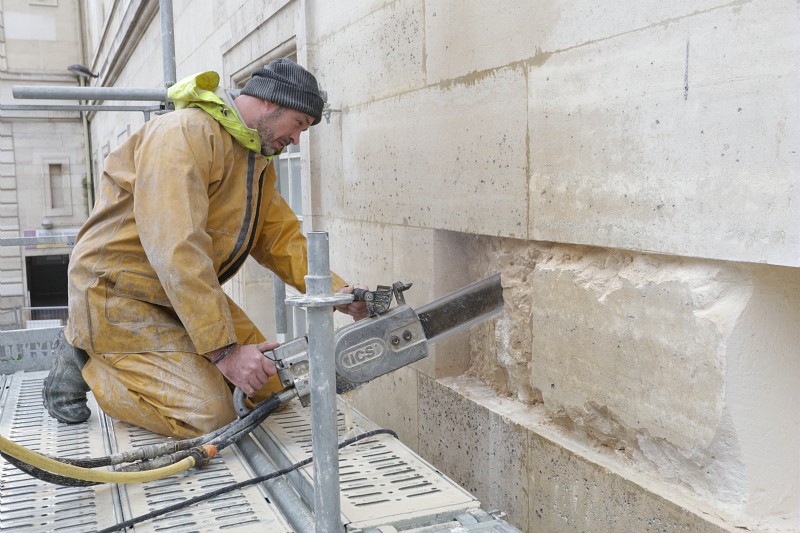
Integrating a 27-ton device into a building whose façade dates back to 1854 is a considerable architectural challenge! The space allotted to the ZAP-X, limited to 100 m², required completely customized adaptations, while always respecting the restrictions linked to the preservation of the site’s heritage.
Some of the most spectacular interventions include :
- Partial demolition of a listed facade, followed by identical stone-by-stone reconstruction.
- The creation of specific foundations 21 metres deep to support the weight of the machine
- Deconstruction of a metre-thick vaulted ceiling forming the first floor
- And finally, the construction of a reinforced concrete pit to house the equipment while guaranteeing the building’s stability.
The work, carried out without disrupting the site’s medical activities, required rare skills in engineering, masonry and heritage conservation.
Underground structure reinforcement: 30 days of absolute precision
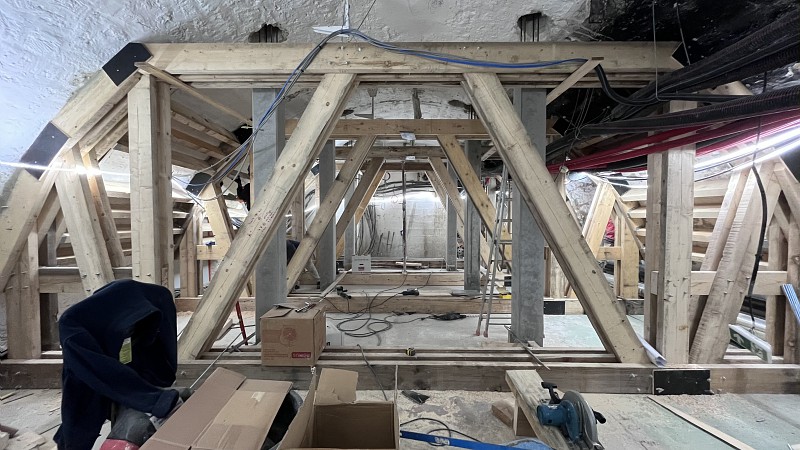
One of the first challenges of this major project was to consolidate the structure beneath the floor. A one-meter-deep reinforced concrete pit was dug and poured, designed to bear the weight of the ZAP-X while guaranteeing the safety of the entire building.
During this phase, wooden arches were installed to support the structure while the pit was being created. In just one month, this essential stage of the project was successfully completed, without disrupting the care provided at the facility.
The opening and consolidation of the façade: 3 weeks under close surveillance
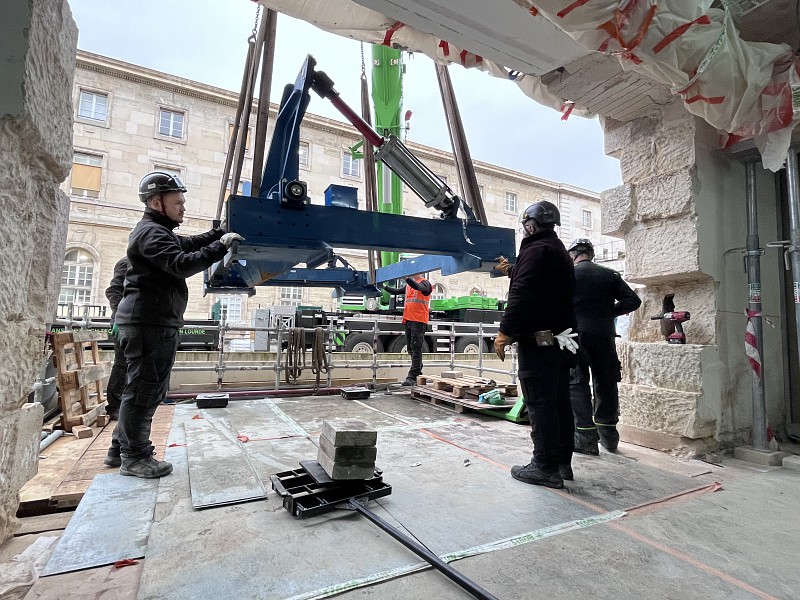
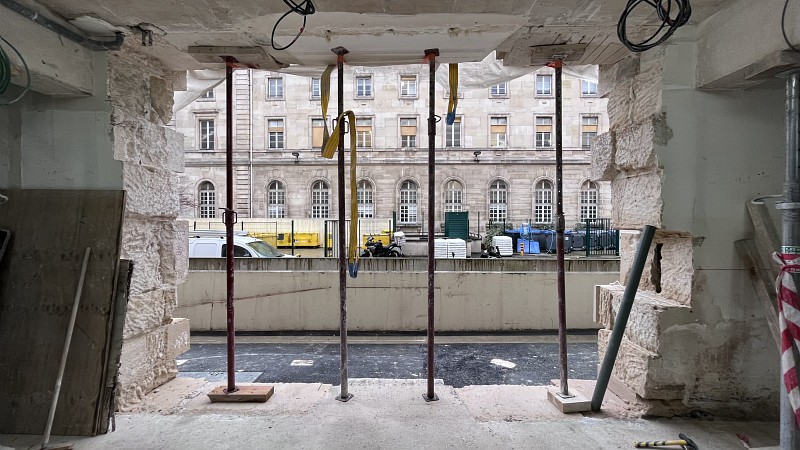
Transporting a device as bulky as the ZAP-X is no easy task, especially when it has to cross a listed facade! Part of the façade had to be opened under the close supervision of a specialist in historical monuments. The latter ensured both architectural conservation and the reversibility of the intervention.
Once the breach had been made, structural consolidations were immediately put in place to preserve the integrity of the building. Within three weeks, this delicate operation had been completed, while respecting heritage constraints.
A meticulous crane operation
One of the highlights of this exceptional project was the delivery of ZAP-X to its permanent location. For three days, an impressive crane operation was carried out by the teams.
The equipment was raised above the extended façade, then inserted with meticulous precision into the building’s west wing. Every action was calibrated and orchestrated thanks to seamless collaboration between the various players: site engineers, crane operators, masons, curators and many others.
Interdisciplinary coordination to meet the challenge
This project would not have been possible without an exceptional level of mobilization. Some ten different trades took turns: construction engineers, masons, crane operators, heritage conservation specialists and other building trades.
They all worked together to ensure that the installation of high-tech equipment could coexist with the constraints of a historic building, while maintaining current medical activities.
The project was also a real organizational feat. Despite the complexity of the operations, the whole project was carried out at a sustained pace and to tight deadlines. The reinforcement of the basement structure was completed in one month, the opening and consolidation of the façade in three weeks, and the craning operation in three days!
The entire project was completed for a total budget of 6.22 million euros.
The ZAP-X room is due to open shortly. This new-generation radiosurgery equipment will enable certain brain pathologies to be treated non-invasively, with unprecedented precision and better protection of surrounding healthy tissue.